

Stucco repair in Cedar City for cracked and deteriorating exteriors on homes built between the 1960s and today
Cracks appear in stucco for several reasons: normal building settlement, seasonal expansion and contraction of framing materials, or improper installation that left the system without adequate reinforcement or control joints. R Gleave Construction repairs cracked, chipped, and water-damaged stucco on residential and commercial properties in Cedar City, addressing the visible damage and evaluating what caused it before completing the work. What you'll see after the repair is a surface that's been cleaned, filled, and textured to match the surrounding stucco, with the goal of restoring both appearance and the exterior's ability to shed water.
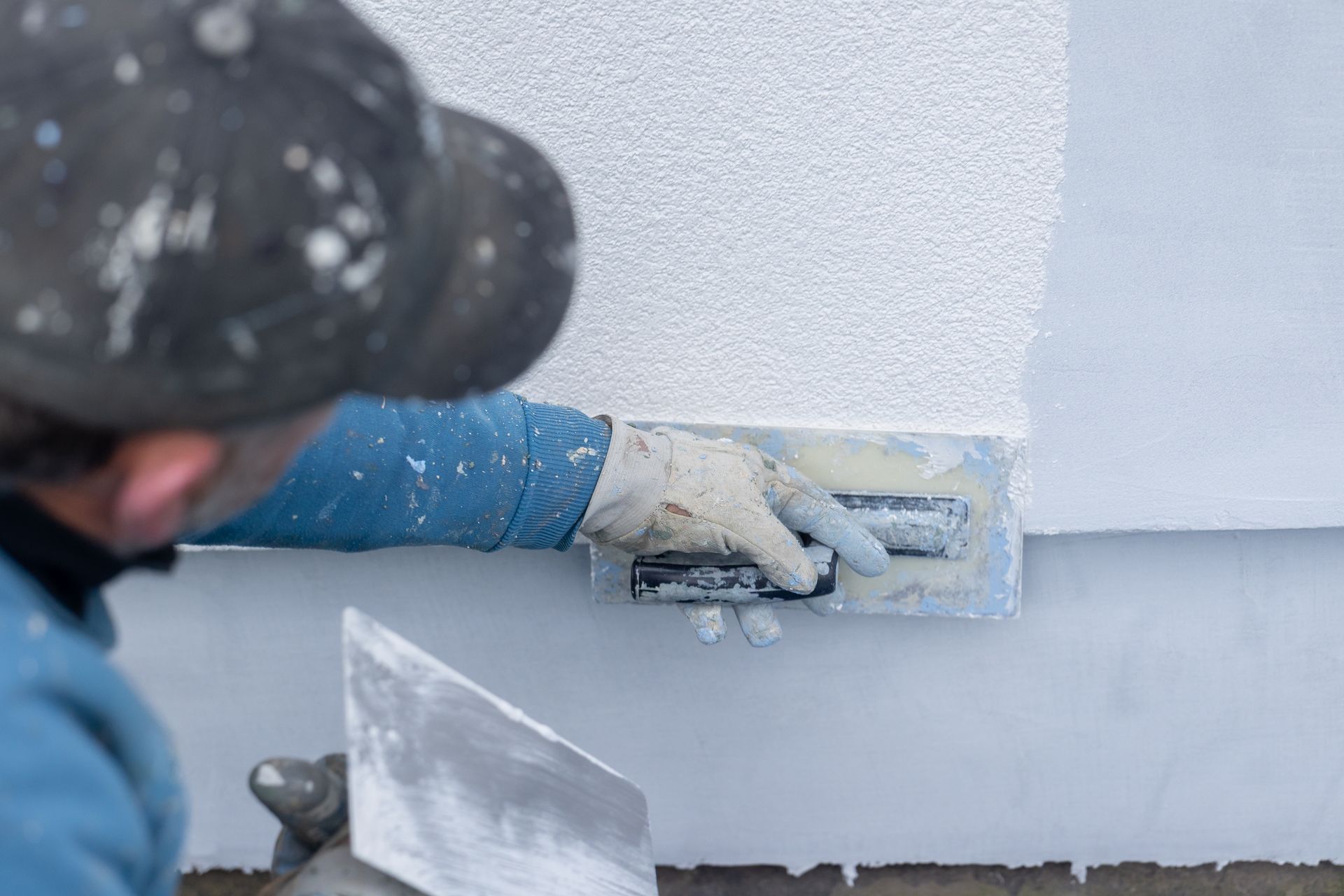
The repair process starts with removing loose or deteriorated material around the damaged area, exposing the underlying lath and checking whether moisture has compromised the sheathing or framing. If water damage is present, those components are dried out or replaced before new stucco is applied. The repair material is layered in the same sequence as the original system—base coat, leveling coat, finish coat—with each layer allowed to cure properly so the patch bonds to the existing stucco without pulling away as it dries.
Arrange an inspection to identify the source of recurring cracks or visible moisture staining on your exterior.
What Causes Stucco to Fail on Southern Utah Homes
Homes built in the 1970s and 1980s in Cedar City often have stucco applied directly over plywood sheathing with minimal or outdated weather barriers, and when flashing around windows was installed poorly or not at all, water enters the wall cavity during wind-driven rain. Over time, this moisture weakens the bond between the stucco and the lath, causing sections to bulge or separate. Repairing these areas requires removing the compromised stucco, installing proper flashing and drainage plane materials, and then rebuilding the stucco system.
After the repair cures, the patched section should be flush with the surrounding wall, the texture should blend visually, and the repaired area should no longer sound hollow when tapped. Color matching is more difficult on older stucco that has faded over years of sun exposure, and in some cases repainting a larger section creates a more uniform appearance than trying to match weathered pigment exactly.
Hairline cracks are common and don't always indicate structural problems, but wide cracks, stepped cracks that follow mortar joints in masonry walls beneath the stucco, or cracks that reappear in the same location after previous repairs suggest movement that should be investigated. Ignoring these signs allows water to enter, and once the sheathing or framing is damaged, the repair becomes significantly more involved.
Answers About Repairing Stucco Damage
These questions address how stucco repairs are performed and what determines whether a repair will hold long-term.
What happens during a stucco crack repair?
The crack is widened slightly to remove loose material, cleaned out, and filled with a compatible repair compound in layers, then the surface is textured to match the surrounding finish once the fill material has cured.
How do you determine if cracking is caused by building movement or stucco failure?
The pattern, location, and width of the cracks are evaluated, along with whether they follow control joints, appear at stress points like window corners, or are randomly distributed across the wall, which helps identify whether the issue is structural or material-based.
Can stucco repairs be performed on homes with older wood-framed construction in Cedar City?
Yes, stucco can be repaired on any structure where the underlying framing and sheathing are sound, though homes from the 1960s and 1970s may require additional moisture barrier upgrades during the repair if water intrusion is present.
Why do some stucco patches crack again shortly after being repaired?
If the underlying cause—such as inadequate control joints, missing flashing, or ongoing structural movement—isn't addressed before the patch is applied, the same stress that caused the original crack will reappear in the new material.
What does it mean when stucco sounds hollow?
A hollow sound when tapping the surface indicates the stucco has separated from the lath or underlying wall, usually due to moisture damage or poor adhesion, and the loose section typically needs to be removed and replaced rather than patched over.
R Gleave Construction evaluates stucco damage on residential and commercial properties and completes repairs that address both the visible problem and the underlying cause. Contact R Gleave Construction to review cracked or deteriorating stucco and determine whether localized repair or section replacement is needed.