

Stone veneer installation in Cedar City for homes combining Southwestern character with durable exterior finishes
R Gleave Construction installs natural and manufactured stone veneer on residential and commercial properties throughout Cedar City and St. George. The work involves applying thin stone profiles to properly prepared exterior walls, entryways, columns, and architectural features using weather-resistant barriers, drainage components, and compatible installation materials. You'll notice the added texture, depth, and curb appeal stone veneer provides, particularly when integrated with stucco or other exterior finishes on properties ranging from newer developments in Enoch to older homes closer to Cedar City's historic district.
The installation process begins with surface preparation—existing walls are evaluated for structural soundness, then covered with weather-resistant barriers and flashing designed to manage moisture behind the veneer. Reinforcement materials such as lath and scratch coat are applied where required by the stone system, followed by the veneer itself, which is set with consistent spacing and alignment. Mortar joints are completed to match the selected profile, whether stacked stone, ledgestone, fieldstone, or ashlar patterns.
Arrange an on-site evaluation to review stone veneer options and discuss installation requirements for your property.
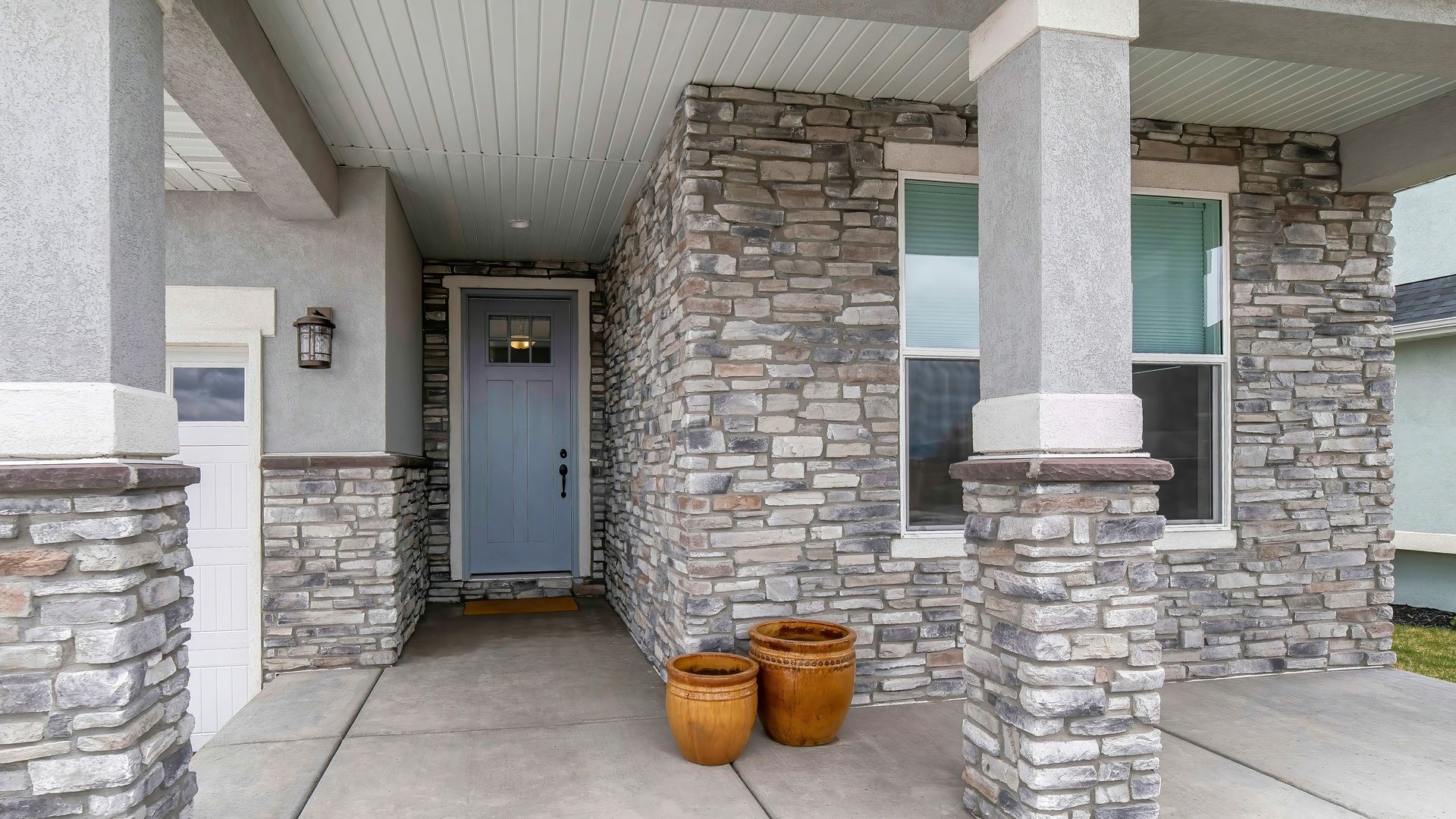
What Proper Veneer Installation Delivers
Stone veneer is secured to the exterior wall assembly through mechanical fastening or adhesive bonding, depending on the product and substrate. The system includes drainage planes that allow moisture to escape rather than accumulate behind the stone, which matters on properties in Cedar City where temperature swings between day and night create expansion and contraction cycles. Natural stone veneer uses genuine quarried material with inherent color variation, while manufactured stone veneer replicates that appearance using cement, aggregates, and pigments engineered for consistency and lighter weight.
Once the installation is complete, you'll see a finished exterior with defined stone patterns, clean mortar lines, and a surface that handles Southern Utah's intense sunlight without the maintenance demands of painted siding. The stone stays in place because the supporting structure was built to carry its weight and accommodate movement, and water drains away rather than pooling behind the material.
Manufactured stone veneer typically weighs less than full-depth natural stone, which reduces structural load requirements and simplifies installation on certain wall assemblies. Both options provide durable finishes when installed with appropriate flashing, proper mortar mix, and attention to manufacturer specifications regarding substrate preparation and fastening methods.
What Property Owners Ask About the Work
Stone veneer projects in Cedar City and St. George often involve coordinating stone placement with existing stucco, wood trim, and architectural features, so understanding the installation sequence helps property owners prepare for the work and recognize quality results.
What happens to the existing exterior wall before stone veneer is installed?
The wall is inspected for structural integrity, then covered with weather-resistant barriers and metal lath or other reinforcement as required by the stone system—this creates a drainage plane and provides a surface for the veneer to bond to, which is critical for long-term adhesion and moisture management.
How is the stone pattern maintained across large wall sections?
Installers dry-lay sections before setting them permanently, adjusting stone placement to maintain consistent joint spacing and visual balance—this step prevents pattern irregularities and ensures mortar joints remain uniform, which affects both appearance and weather resistance.
Why do some stone veneer installations include weep screeds at the base?
Weep screeds allow moisture that enters the wall assembly to drain out at the bottom rather than accumulating—they're required by code in many applications and become especially important on walls exposed to driven rain or near grade where water can wick upward.
What changes after stone veneer replaces an older siding material?
You'll notice improved curb appeal, a more textured exterior surface, and reduced maintenance compared to painted wood or vinyl—the stone doesn't require repainting, resists impact damage better than softer materials, and maintains its color longer under direct sun exposure common throughout Cedar City.
How are stone veneer columns installed differently than flat walls?
Columns require additional attention to corner details, full enclosure with weather barriers, and sometimes internal reinforcement depending on whether they're structural or decorative—the stone wraps the column with mitered or interlocking corner pieces that maintain the pattern while protecting vulnerable edges from water intrusion.
R Gleave Construction handles stone veneer installation on homes and commercial buildings throughout Cedar City, combining stone finishes with stucco and other exterior materials to create coordinated designs that suit the property's architecture. R Gleave Construction also installs stone veneer in Washington, Hurricane, Ivins, Enoch, and Parowan. Request a detailed estimate based on your exterior layout and stone selection preferences.