

Stucco patching in St. George for holes and damaged sections left by construction, impacts, and fixture installations
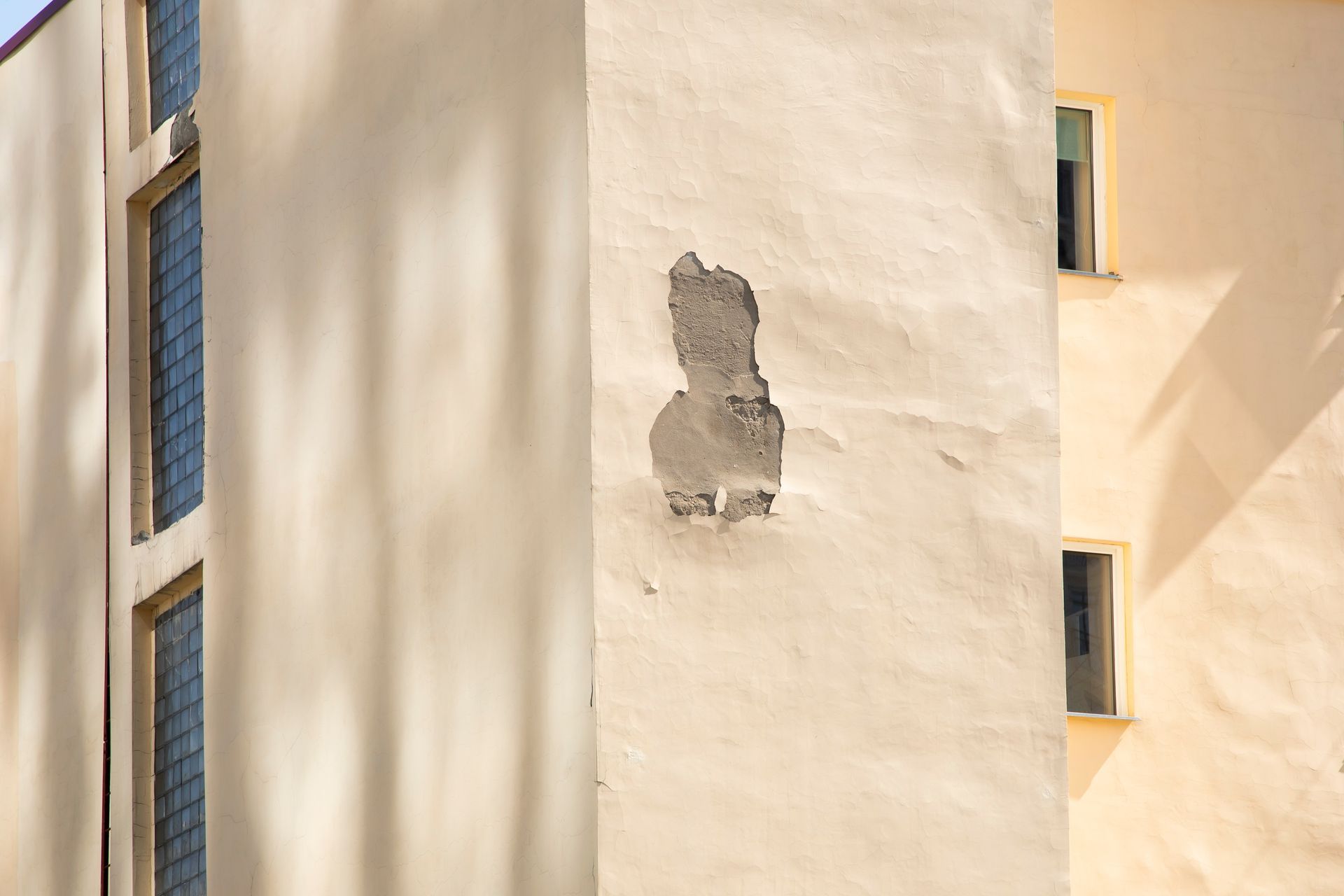
Holes in stucco appear after electrical panels are relocated, exterior lights are moved, plumbing vents are rerouted, or satellite dishes and old signage are removed. R Gleave Construction patches stucco on residential and commercial properties throughout St. George, restoring the exterior after renovation work, addressing damage from impacts or equipment, and filling areas where the finish has chipped away or crumbled. The patching process involves cleaning the damaged area, rebuilding the stucco in layers to match the thickness of the surrounding wall, and texturing the surface so the repair blends with the existing finish.
Preparation determines whether a patch holds. Loose material around the hole is removed until solid, well-adhered stucco remains, and the edges are undercut slightly so the new material can key into the existing surface. If the metal lath is damaged or missing, new lath is fastened in place before the base coat is applied. Each layer—scratch coat, brown coat, finish coat—is applied in sequence with curing time between stages, replicating the original three-coat system so the patch has the same structural integrity as the surrounding wall.
Request an evaluation for stucco damage around door and window replacements or utility work.
Why Patching Requires Matching Texture and Thickness
Stucco thickness on older homes in St. George varies depending on when the house was built and whether the original contractor followed standard three-coat application or cut corners with thinner layers. If a patch is applied without rebuilding the full depth, it will sit recessed from the surrounding surface and be visible even after texturing. Matching the finish texture—whether sand, lace, or dash—requires using the same application tools and techniques as the original installer, and even then, exact matches are difficult on stucco that has aged and weathered for decades.
Once the patch cures and dries fully, the repaired area should be flush with the wall, the texture should approximate the surrounding finish, and the surface should be solid when tapped. Color matching is harder to control because stucco pigments fade at different rates depending on sun exposure, and patches on south- and west-facing walls in St. George often require repainting a larger section to achieve visual consistency.
Small patches are straightforward when the stucco around the hole is in good condition, but if the surrounding area shows cracking, soft spots, or discoloration, those issues should be addressed at the same time. Patching over compromised stucco just delays a larger repair, and the new material won't adhere properly if the substrate underneath is failing.
Common Questions About Stucco Patching
These questions cover the patching process and what to expect when repairing localized stucco damage.
How is a stucco hole prepared before the patch material is applied?
The edges of the hole are cleaned and undercut, loose debris is removed, any damaged lath is replaced or supplemented, and the area is dampened so the base coat bonds properly without drying too quickly.
What determines whether a patch will blend with the existing stucco?
The thickness, texture, and color of the patch must match the original finish, and because older stucco has weathered and faded, achieving an invisible repair often requires repainting or refinishing a larger area beyond just the patched section.
Can stucco patches be performed on mid-century homes in St. George?
Yes, stucco patching works on any building where the existing stucco is structurally sound, though homes from the 1950s through 1970s may have thinner stucco systems or outdated lath that requires supplemental reinforcement during the repair.
Why do some patches crack or fall out shortly after being completed?
Insufficient surface preparation, skipping the base coat, applying material too thickly in one layer, or failing to allow proper curing time between coats all cause patches to fail prematurely.
What should you do if the stucco around the patched area starts cracking later?
Investigate whether the original damage was caused by building movement, water intrusion, or a failing stucco system, because recurring damage suggests the underlying problem wasn't resolved when the patch was applied.
R Gleave Construction also patches stucco in Cedar City, Washington, Hurricane, Ivins, Enoch, and Parowan. R Gleave Construction completes stucco patching on homes and commercial buildings and coordinates the work with window replacements, siding upgrades, and other exterior projects. Discuss the scope of your stucco damage and request a patching estimate.