

Exterior stone siding in Cedar City for homes replacing vinyl or aging stucco with permanent stone finishes
Many properties in Cedar City were built during periods when vinyl siding and T-111 plywood were standard exterior finishes—these materials are now showing age through cracking, fading, and moisture damage, particularly on homes built in the 1970s and 1980s. Exterior stone siding replaces those finishes with natural or manufactured stone veneer installed over the entire wall surface, creating a cohesive appearance that eliminates the need for repainting and resists impact damage better than softer materials. R Gleave Construction installs stone siding on residential and commercial properties, evaluating the existing wall assembly first to determine if sheathing replacement or structural reinforcement is needed before stone is applied. The work involves removing old siding, inspecting and repairing the substrate, then building up the weather barrier, lath, and stone layers that will form the new exterior.
Installation starts at the foundation line with a weep screed that establishes the bottom edge and allows drainage—stone is then set course by course, moving upward with attention to maintaining horizontal alignment and consistent joint spacing. Windows and doors require flashing integration and careful stone cutting to achieve clean reveals. Corners use specially shaped stones that interlock or miter, and the top course ties into the soffit or roof edge with flashing that prevents water entry. The result is a continuous stone facade that handles weather exposure without the maintenance demands of painted or coated products.
Schedule an exterior evaluation to assess substrate condition and discuss full stone siding installation.
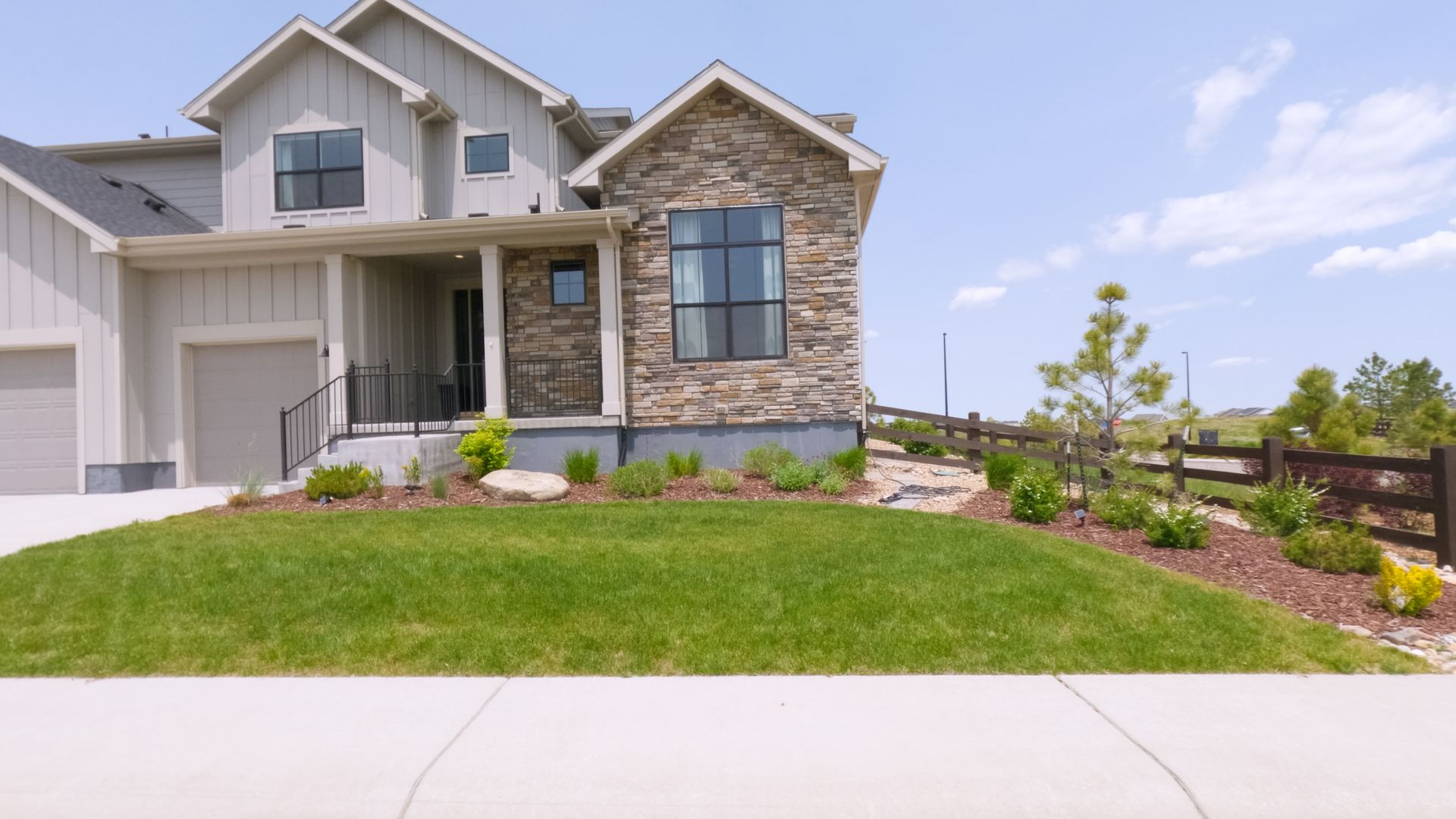
Full-Coverage Stone Versus Accent Placement
Stone siding covers all above-grade wall surfaces, which increases material and labor costs but produces a uniform appearance without transitions between materials. The installation requires more extensive surface preparation than accent work because every square foot of wall must meet the same standards for flatness, drainage, and structural support. Full-coverage installations take longer—walls must be prepped, barriers installed, and stone set in sequence from bottom to top, with work pausing periodically to allow mortar to cure before upper courses are added. This approach makes sense when the existing exterior is failing across multiple elevations, when the property's architectural style benefits from continuous stone, or when the owner wants to eliminate all future painting and most ongoing maintenance.
Once complete, you'll see a building that reads as stone from every angle, with no visible seams between stone and other materials except at controlled transition points like windows and roof lines. The stone siding stays attached because it was built on a structurally sound substrate with proper load transfer, and it sheds water because mortar joints were tooled to slope outward and weep screeds were installed at the base.
Stone siding works well on single-story ranch homes and two-story traditional designs common in Enoch and Cedar City's older neighborhoods—on taller buildings, scaffolding and staging requirements add time and cost, and the additional weight may necessitate foundation evaluation before installation proceeds.
Questions Before Starting Your Project
Full exterior stone siding represents a significant investment and permanent change to the building's appearance, so understanding the installation process and material behavior helps property owners make informed decisions.
What determines whether existing sheathing can support stone siding?
Sheathing must be flat, structurally sound, and capable of holding fasteners—OSB and plywood are typically acceptable if they're not water-damaged or delaminated, while older board sheathing may need reinforcement or replacement, and the inspector checks for rot, warping, and adequate fastening to the studs before approving the substrate.
How is stone siding installed around windows without creating leaks?
Windows are flashed with self-adhering membrane that laps over the weather barrier and extends beyond the window frame, then stone is cut to create a reveal or tight fit against the frame—sealant is applied at the stone-to-frame joint, and a drip edge or sloped sill directs water away from the opening.
Why do full stone facades sometimes require additional structural support?
Stone adds significant dead load to the wall, and older homes may not have been designed for that weight—if the foundation footing is narrow or the framing is undersized, engineers may specify additional footings, steel lintels over openings, or wall bracing to carry the load safely, particularly in areas with seismic activity.
What happens at the roof line where stone siding terminates?
A termination flashing is installed that covers the top edge of the stone and tucks under the roof underlayment or behind the fascia—this prevents wind-driven rain from entering the wall assembly and provides a clean visual line where the stone ends, and it must be sealed and fastened to remain weathertight over time.
How does stone siding perform compared to fiber cement or vinyl?
Stone resists impact better, doesn't require painting, and maintains color longer under UV exposure—it's heavier and more expensive initially, but it eliminates the cyclical maintenance and replacement costs associated with other siding types, and it provides better fire resistance, which matters in areas subject to wildfire risk.
Exterior stone siding changes a building's appearance permanently and improves durability when installed correctly with attention to substrate preparation, drainage, and material compatibility. R Gleave Construction also installs exterior stone siding in Washington, Hurricane, Ivins, Enoch, and Parowan. Contact R Gleave Construction to review stone siding materials and obtain a detailed project estimate.