Roof Repair vs. Replacement in Saint George, UT: How to Know Which One Your Home Actually Needs
A Saint George roof that looked fine all spring can spring a leak the moment the first monsoon rain hits in July — because intense UV and heat have been silently degrading flashing seals and shingle binders for months. That pattern makes the repair-vs-replace decision here genuinely different from what you'd face in a moderate climate, and getting it wrong in either direction costs real money.
Why Saint George's Climate Changes the Math
Southern Utah's combination of roughly 300 sunny days per year, UV Index readings that regularly hit 10–11 in summer, and roof-deck surface temps that can top 160°F creates a degradation rate most manufacturer warranties don't account for. Those warranties are tested in moderate climates, so a shingle rated for 25 years may realistically last 20–22 years here — and a 3-tab shingle rated for 20 years may give you closer to 15–18.
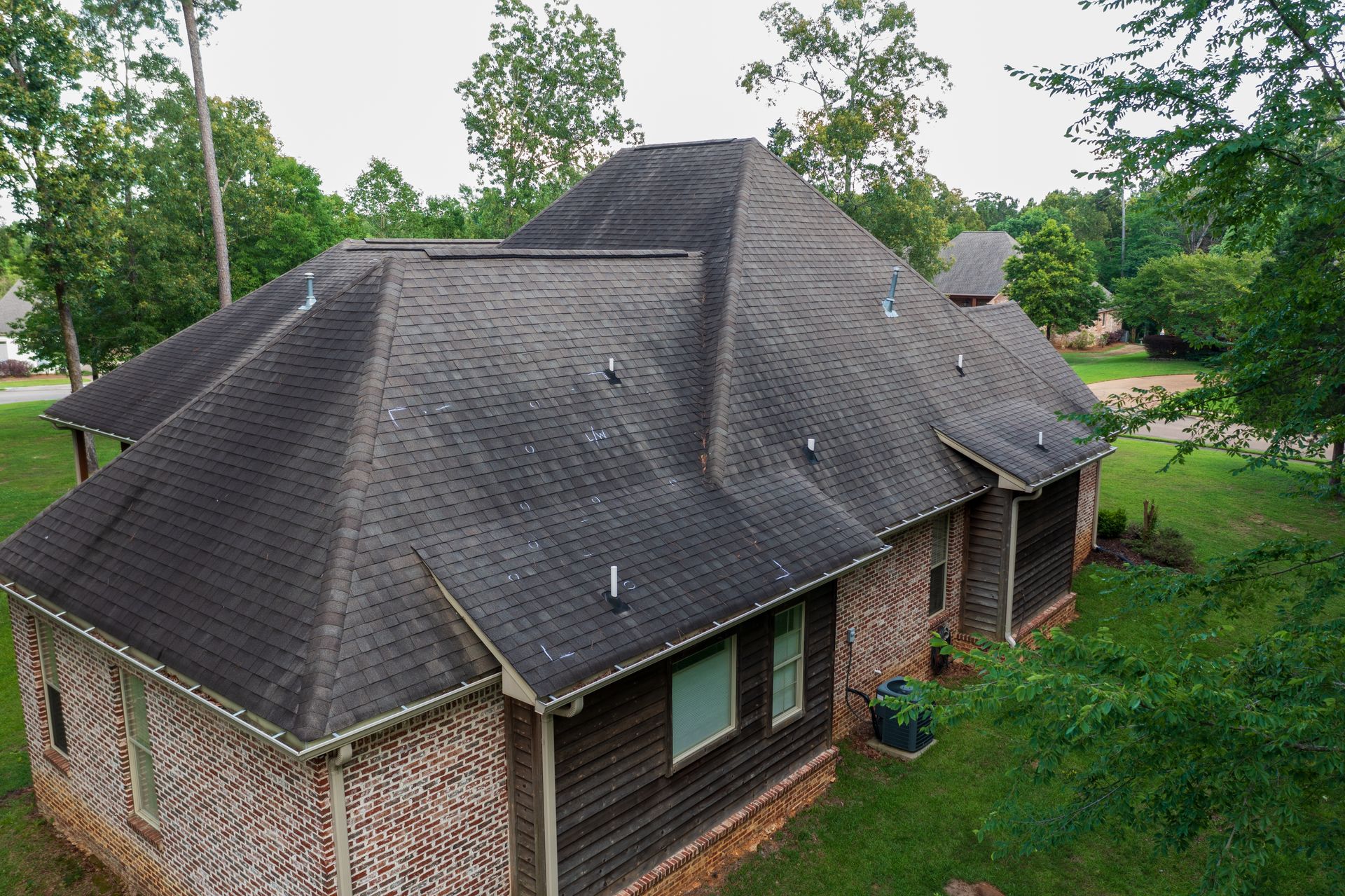
UV breaks down the asphalt binder in shingles from the top down. The visible sign is granule loss — bare patches on the shingle surface and a buildup of sand-like granules in your gutters. By the time you spot it from the ground, the process is usually well advanced. Flat and low-slope roofs, which are very common in Saint George's Southwestern-style architecture, face a separate problem: heat expansion and contraction causes seam separation and membrane blistering that can let standing water from a monsoon downpour find its way into the deck.
Checking your gutters after a storm for granule accumulation is one of the simplest early-warning steps you can take. You can read more about drainage and runoff management on the gutters service page.
How Old Is Too Old? Age Thresholds by Material
A roof's age relative to its realistic Saint George lifespan is the single most reliable repair-vs-replace signal — more reliable than any single visible symptom.
3-tab asphalt shingles are in safe repair territory through about year 10; past year 12 with visible damage, replacement is usually the smarter financial call. Architectural shingles give you a repair window through roughly year 15, with replacement signals appearing around year 18. Concrete and clay tile last 35–45 years here and are generally repair-friendly unless you find widespread cracking or deck failure underneath. Flat membrane systems — TPO, EPDM, modified bitumen — realistically last 12–18 years in this climate; systemic blistering or ponding damage affecting more than 25–30% of the surface is a replacement signal, not a patch job. Spray foam (SPF) roofs depend heavily on recoat schedule; miss two or three recoat cycles and you may face substrate failure that no surface repair can fix. Metal roofs are the outlier — fastener and seam repairs are usually sufficient, and full replacement is rare.
If your roof is past its realistic Saint George threshold and you're dealing with more than one leak point, you're likely looking at systemic failure rather than isolated damage.
Is Your Roof a Repair Candidate or a Replacement Candidate?
Repair is the right call when damage is isolated — a single leak source covering less than 10–15% of the surface, a flashing failure at one penetration, a few cracked tiles with no underlayment saturation, or a single seam separation on a flat roof that's otherwise intact. The structural deck must be sound: no soft spots, rot, or sagging.
Replacement becomes the clear answer when multiple leak points exist, when leaks keep returning after prior repairs, when granule loss is widespread, when deck damage is discovered during inspection, or when your repair estimate exceeds about 50% of full replacement cost. That last benchmark — sometimes called the '50% rule' — is used by many contractors and insurance adjusters as a practical cutoff point.
One pattern worth knowing: on tile roofs in Saint George, the felt underlayment beneath the tile often fails before the tile itself does. A contractor who patches broken tiles without inspecting the underlayment underneath is treating the symptom, not the cause. Similarly, caulking over deteriorated step flashing or patching over a flat roof with multiple blister fields are repairs that buy weeks, not years.
For a full overview of what repair and replacement services involve, the roof repair and replacement services page covers scope and options in detail.
Does Heat or UV Damage Count as Storm Damage?
Standard homeowner's insurance treats UV and heat degradation as wear and tear — it's not covered. What is covered: monsoon hail, high winds, and water intrusion caused by those events. The gray zone is a roof that UV has weakened to the point where a monsoon storm causes failure it otherwise wouldn't have. Adjusters may dispute that coverage, calling the failure 'pre-existing.'
The practical takeaway: photograph your roof condition before and after monsoon season, and ask any contractor you hire for a written inspection report that separates storm-caused damage from age-related wear. If a contractor tells you a 20-year-old roof's problems are all storm damage, get a second opinion before signing anything.
Timing Your Decision Around Saint George's Monsoon Season
The North American Monsoon brings 60–70% of Southern Utah's annual precipitation between July and September — in sudden, high-volume bursts rather than gradual soaking rain. Spring, before monsoon season starts, is the ideal time to schedule a preventive inspection so you can address flashing gaps, valley seams, and penetration seals before they're tested by the first heavy downpour.
If you've already had interior water intrusion — ceiling stains, dripping, wet insulation, or a mildew smell in the attic — that requires immediate action, not a wait-and-see approach. Mold can establish in as little as 24–48 hours in a wet attic, and remediation costs can equal or exceed the roofing cost itself if moisture damage spreads to insulation and drywall.
Granule buildup in gutters with no active leak, minor surface cracking on a flat roof membrane with no ponding, or a few cracked tiles with no visible water intrusion are all 'schedule within 30–60 days' situations rather than emergencies.
Getting the Most from a Professional Inspection
A credible inspection covers the attic first — moisture, ventilation adequacy, and decking condition — then the surface, all flashing penetrations, ridges, valleys, and (for flat roofs) drainage points including scuppers and interior drains. The inspector should provide photo documentation of findings and a written report that distinguishes repair scope from replacement scope. An inspection that ends only in a sales pitch, with no written condition assessment, is a red flag regardless of what the contractor tells you.
When evaluating local contractors, verify their license through Utah DOPL, ask for itemized written estimates that list materials by brand and grade, and confirm whether their warranty covers workmanship separately from the manufacturer's material warranty. After significant monsoon events, out-of-area contractors arrive in volume — verify a physical local business address before signing anything.
Knowing your roof's actual condition, in writing, puts you in a position to make a confident financial decision rather than a reactive one.
Schedule a professional inspection before monsoon season hits, and you'll have the information you need to repair strategically or plan a replacement on your timeline rather than under emergency pressure. Explore your options with R Gleave Construction, where the inspection process focuses on condition findings — not sales pressure.